
Exclusives

Cyndi Lauper

Actress, singer, songwriter and musical icon, Cyndi Lauper, has reached over 50 million global record sales thanks to her much-loved and critically acclaimed writing and performances. Her career has spanned 30 years, she has been inducted into both the Hollywood and Songwriters Hall of Fame, creating Hey Now (Girls Just Wanna Have Fun), True Colours, All Through The Night, Time After Time and Change Of Heart, to name just a few of her smash hits. Cyndi can be credited as a musical revolutionary, bringing punk elements of style and attitude into the mainstream, thanks to her signature fashion, vocals and liberal lyrics. Cyndi Lauper was the first woman to have four top five hits from a debut album, the first woman to win the composing category solo during the 2013 Tony Awards and one of a select list women to have won competitive Grammy, Emmy and Tony awards. Most reccently, she has wowed with her unique, cross-genre albums. Lauper has also become a powerful LGBT advocate (she is both a gay and feminist icon) campaigning for equality through charities and Gay Pride events around the world. She co-founded the True Colors Tour for Human Rights throughout the United States and Canada in 2007. In 2010, Lauper’s True Colors Fund launched the Give a Damn campaign, to help get straight people more involved in LGBT rights. Cyndi Lauper is a woman who, after years of gaining respect and admiration in the music industry and now 62 years old, can pretty much do what she wants – and what she’s chosen to do now is a country album! DETOUR, released on May 6, is an 11-track cover album, featuring some of country music’s very best artists and session players. It’s also her first solo album in six years. I spoke with Cyndi Lauper to find out why, and it seemed that her motives and outlook on the album were just as charming and colourful as her New York accent and bright pink hair… We managed to fit in time to speak in between Cyndi’s busy schedule promoting this album; she tells me it’s important to her to “meet all the people that are gonna be selling the record. These are the people who will be rolling their sleeves up with you, so it’s good that you meet everybody and say ‘thank you’, for the work we’re about to embark on.” It’s refreshing to hear that the singer still appreciates each and every process of a new album – but before we talk more about her role and vision in its creation, I can’t wait and I have to ask – why a country album and why now? “Well, because I could,” she responds with bright bluntness that shapes the rest of our interview. “And because I wanted to work with Seymour Stein.” It was a career-long ambition to work with Seymour Stein. “I always wanted to work with him,” she tells me. “He was the one who signed the Talking Heads, signed the Ramones. You gotta understand what that was in New York, at that time. It was like oh my god, he had everybody!” Stein is a top dog in the music industry: Vice President of Warner Bros and Records and a co-founder of Sire Records. Sire Records was a central part of the 80’s new wave movement; Stein signed ground-breaking artists under the label such as the Ramones, Talking Heads, The Pretenders, Madonna, Depeche Mode, The Cure and The Undertones. Perhaps surprisingly, DETOUR is Cyndi’s first release with Stein. Equally surprising, the two of them planned to create a “kind of Americana [album, from] the time period of country when [it] walked hand-in-hand with R&B,” says Cyndi. “I felt like that was a perfect complement to the MEMPHIS BLUES record that I did – which [covered music from] around the same time period.” Lauper has spent this most recent stage in her career looking to the past for inspiration. 2010’s MEMPHIS BLUES became Billboard’s most successful blues album of the year, remaining at number one on the Billboard Blues Albums chart for 14 consecutive weeks and featuring the late blues legend, B.B. King. Prior to that, in 2003, Cyndi put together a successful collection of jazz standards, AT LAST. To read more, purchase that May 2016 issue of Maverick here

Cyndi Lauper Read More »

The Corrs

Making Magic Hyde Park in the summertime: An audience of 50,000. Andrea Corr holds the microphone out to the crowd and asks them to sing along with her. She smiles and glows with the Corr family’s natural charm but her nerves are clear too – no sound-check, no large-scale performance in ten years and weeks of tears before the show… She’s met with a chorus of voices singing along to smash hit Runaway, swaying to the dreamy love song. For the first time, her Dad Jerry isn’t physically present to support her career but her sisters Sharon and Caroline and brother Jim are beside her – and the band’s children are backstage watching their parents play as a band on stage for the very first time. The Corrs are back. The Corrs – Andrea (lead vocals, tin whistle), Sharon (violin, vocals), Caroline (drums, percussion, piano, bodhrán, vocals) and Jim (guitar, piano, keyboards, vocals) – were an international success in the 90s and early 2000s, playing a unique blend of Celtic pop and folk rock – and bringing Celtic rooted music to a mainstream audience. Their most successful album, TALK ON CORNERS, was the UK’s highest selling album in 1998 and went multi-Platinum in Australia; Third Corrs album, IN BLUE, reached number one in 17 countries. Hits such as Breathless, Runaway and What Can I do? and five studio albums won the band a loyal fanbase and critical success. Now, they have returned after a ten year hiatus, that was decided whilst they stood at the peak of success. Charlotte Taylor talks to Andrea and Jim Corr about their return to the industry, much-awaited new album and a comeback tour this year. Back on stage The Corrs released their sixth studio album WHITE LIGHT on November 27, 2015, following the announcement of their return to the industry (as a band) on Chris Evans’ breakfast show on BBC Radio 2, an impressive comeback performance as part of Radio 2 Live in Hyde Park 2015 and a series of smaller showcases. Launching their album was “amazing” and sharing this symbolic new release “after a year’s work … has been intense,” says Andrea. “As far as we are concerned, if you are going to come back after ten years it has got to be great,” she explains with an air of grounded confidence. “We have really pushed every song to the limit. I feel that each of us is very, very emotionally connected to this work and to each song. So it was kind of, it is kind of, almost a relief letting it go, to be honest. Letting it go out into the world – and then what will be will be …” The Corrs were active in the industry from 1990 – 2005, creating five studio albums and with Sharon and Andrea also pursuing solo careers. Ten years is quite the hiatus But the siblings didn’t worry Jim is just as “delighted with how it is going” as his sisters. “It feels wonderful. We really missed playing together and we only realised that to the extent when we got back up on stage and in Hyde Park.” “You know, it is quite funny, it feels really natural,” Andrea explains. “Even though our first gig back was when we were in the middle of making the record and that was Hyde Park, so that was obviously seriously deep end stuff – in front of 50,000 people! As crazy as that is after ten years, there were certain aspects of it that felt like it was yesterday that we had done it [last].” “…But then at the side of the stage we had proof that it wasn’t! Our children. The ten years was there in people on the right of the stage.” Since letting the band lie, Andrea, Caroline, Sharon and Jim have all lived lives centred around their families, with eight children between them. “I think that [with] the distance and the time away, we focused on our own individual lives … It gives you a greater perspective on the whole thing – that really we are here to enjoy it now,” recounts Andrea. And now they are back not out of boredom, not out of label pressures but “because of the music, because we were inspired together. And we do feel that we bring out the best in each other. We are loving being back and playing together.” I ask them both what it could have possibly meant to have seen the the crowd sing along to Runaway at Hyde Park after ten years of being parents – not musicians in an internationally successful band? “To be honest it was unbelievable. That was an incredibly emotional day for me … for all of us. But it built up for me. I went through crying maybe once a day for the weeks before [to] crying the whole day the day before,” Andrea admits. “It was the size of it, you know, the emotional gravity of being back with my sisters and brother on the stage and then also that it was the first that neither of our parents have seen – in the physical dimension anyway. So it really was really emotional – but the welcome we got then further added to that. I mean second song in we did Runaway and the whole crowd sang it. It was a real moment, for us anyway.” “…Especially through the quiet part of Runaway, it was amazing,” says Jim. “And Breathless. We had some technical issues on the first song and we were a little bit nervous,getting up on the stage because we didn’t have a sound check … without a sound check you don’t know how things are going to go. But as soon as we settled into it and once we entered in the second song and everything was going fine, we started to relax and it was wonderful to hear the crowd sing along with the songs.” Making magic again The

The Corrs Read More »

Eva Cassidy

Nightbird On November 2, 1996 music lovers across the world lost one of their most treasured and loved artists. Yet, the tragedy is that at the time, they were still to discover her wealth of talent. To commemorate 20 years since Eva Cassidy’s passing, Megan Gnad speaks to her family, label and admirers, about her posthumous career, the iconic Blues Alley recordings, the price of fame and the legacy the sweet songbird leaves behind. Bill Straw remembers the life-changing phone call as vividly as if it were yesterday. The President of Blix Street Records listened carefully as singer Grace Griffith relayed with urgency how he must listen to a relatively unheard of young singer from Washington D.C. “She said ‘you have to hear this wonderful singer. This wonderful nightingale, I’m afraid we’re going to lose.’ She sent me a tape and it was cued up to Fields Of Gold. I knew immediately, within seconds, she was extraordinary and by the time I’d heard the whole album, I knew she was one of the best ever.” Tragically, within one month of hearing Eva Cassidy’s glorious recordings, he learned the singer had passed away at just 33 from melanoma. Family and friends mourned the loss of a loved daughter, sister, friend and talented musician, but, for an artist who would go on to have such a massive posthumous career, it now seems unfathomable that they wept in relative privacy. The outpouring of grief from the public would follow. Once the world realised what it had lost, music lovers took Eva to their hearts. She is now recognised as one of our greatest female musicians, with an influence on almost every genre, including jazz, blues, country, gospel, folk, pop and rock. The fact that her music even had the chance to be shared can be put down to a series of luck and good judgement, and a public desire to listen and make sure this songbird would never be forgotten. For that we have a set of recordings to thank from one special night at the Georgetown jazz club, Blues Alley. These tracks ensured she became a superstar and have now been reproduced and packaged into a 31 track album and DVD, NIGHTBIRD, set to commemorate 20 years since her untimely death. On the night of January 2, 1996, Eva and her band, made up of Chris Biondo (bass), Lenny Williams (piano), Keith Grimes (lead guitar) and Raice McLeod (drums) took to the Blues Alley stage, using money from the small pension Eva had cashed in at her tree nursery job.“We thought we’d get airplay, and sell a thousand copies so Eva could put some money toward a PA system,” explains Biondo. The band was booked for two nights and with family, friends and a few members of the press in the audience, it was a resounding success. They had nailed it in one take. But as they listened to the recordings back, their hearts sank. The lighting system had somehow created a buzz throughout the entire show and they were swiftly deleted. No one has ever heard them since. Suddenly the pressure was on. It was January 3 and Eva was suffering from a cold. While she gave it her all, she was not satisfied with the recordings and her first thought was to scrap the lot. Fortunately, once she heard the final mixes, she was persuaded by her band mates to allow the original, 12 track, LIVE AT BLUES ALLEY album to be released – with one condition. The album would end with her studio recording of Oh, Had I A Golden Thread, a performance she was particularly proud of. It was to be the only solo album Eva Cassidy released in her lifetime and helped her work become promoted to its legendary status. Within ten months of the showcase, Eva was gone, but Bill Straw had been keeping a close eye on her wellbeing, through Eva’s friend, Grace Griffith. “I knew that she was not long for this world, and I also knew she was most likely to be famous, and wasn’t going to be around to enjoy it,” he says. “I ran around in my car for months listening to it and it was just profoundly sad. I didn’t know how her parents would feel about it, whether they would have her music marketed, or if it would be too painful. I basically wasn’t thinking about business at all.” Bill says he had enough experience to know he was hearing a great performer but he also knew a lot of major companies had passed on signing her. “I knew audiences would embrace Eva immediately,” he says. “The individuals within [the industry] certainly knew what they were hearing, but they didn’t know who would buy it. They were trying to create packages that they could market using mainstream radio, and mainstream radio wouldn’t play Eva Cassidy, because it didn’t fit the formula.” By April 1997, Bill was in Washington working on Grace’s project, when he was invited for dinner with Eva’s parents, Barbara and Hugh Cassidy. He says her death hit the artistic community in D.C. “pretty hard” as many found out about her and lost her within the same timeframe. With this in mind, there was a desire from her parents to honour this groundswell of love and, with Chris Biondo’s help, they soon put out EVA BY HEART. By this stage, Bill had heard the original LIVE AT BLUES ALLEY, EVA BY HEART and the 1992 duet album with Chuck Brown, THE OTHER SIDE. He was soon harbouring plans to create a super album. With her parents’ support, he compiled the now-famous, SONGBIRD record, featuring a selection of songs from these previous recordings, notably Fields of Gold, Autumn Leaves and People Get Ready. Upon its release, the album’s impact and popularity occurred in stages, and soon the press were writing favourable reviews and radio stations were playing the songs. “We got little breakthroughs in different areas,” says

Eva Cassidy Read More »

Walter Trout

Starting Over Charlotte Taylor meets with bluesman, Walter Trout, to talk about overcoming his extremely close brush with death, the emotional new album BATTLE SCARS that followed and a subsequent tour that Walter “never would have considered” whilst lying on his hospital bed. BATTLE SCARS is Walter Trout’s 42nd album release; a blues guitar icon, he has been playing music for half a century, gaining international acclaim and receiving honours that include two Overseas Artist of The Year wins at the British Blues Awards. In fact, it was just before he was taken ill that Provogue Records had planned a ‘Year of the Trout’ worldwide tour and marketing campaign to celebrate his 25 years as a solo artist. But it was not to be. Darker times, living on the streets in the 70s, caught up with a now settled Walter, who was a whole world away with a successful music career, passionate and loyal fanbase and a family he adores. At the start of 2014, Trout was placed in intensive care, suffering from liver disease, losing staggering amounts of weight and muscle, and with no chance of recovering without a transplant. To his complete disbelief, Walter’s friends, family and fans raised almost a quarter million dollars in an online campaign to help pay for the expenses involved in receiving a new liver and the transplant surgery. This wonderful display of love and loyalty spurred on Walter, as he readied himself to face the next battle – relearning what once came naturally, playing the guitar and writing new songs once again. He had wanted to write a positive album to reflect his new lease of life, but found that what he needed to do was to write about his pain and his experiences. Even though Walter Trout has been through hell and back and his accounts of these times are vivid and heartbreaking; they, like Walter, are also full of hope. Speaking with him, he displays gratitude, humility as well as pride for what he has achieved, and hope for the future of his music and his genre – and he’s also still full of that matter-of-fact charm that he’s become so loved for in the industry. I begin our conversation with a congratulations for everything that Walter has achieved since his recovery – a new album, live shows and now a worldwide tour. But was a return to music always his goal along the way? “Never at all, if you told me a year ago I would have said ‘no way!’” Walter begins. “When I was at my worst I would say to my wife ‘if I can just survive this and still get to be with you and be with our kids, if I don’t play again – so be it…’ “I was prepared to live my life listening to records and watching YouTube videos and saying ‘that’s what I used to do.’ I had visions of cleaning a table in a restaurant or something and being a bus boy and saying to somebody ‘oh I used to play the guitar.’ – And I would have done it, but I’d have been hollow.” After his transplant on May 26, 2014, Walter moved home and started on the the road to becoming himself again. He made the decision to relearn how to play. “I lost more than half of my body weight. I lost 120 pounds – and that was muscle, not just fat. I had no muscles in my arms, I was skin and bones. I attempted to play when I was still in the hospital. My oldest son, John, came over … he brought me a Stratocaster and said ‘here, you have to keep in touch with who you are.’ I tried to get a note to come out and I could not press the string to the fret. I didn’t have the strength. I broke down and I said ‘take it out of here, I can’t look at it, I can’t think about that!’” But when Walter moved back home he started receiving physiotherapy and he used this time to work on reteaching his muscles to play the guitar. “I would sit on my couch and at that point I got determined. What else do I have to do? I’ve got three hours a day at this physical therapy place and then I’m home. So it would be get up and try to walk, and sit on the couch for hours and try to get it back… “It was still there. I still knew how to do it, I was just physically unable to do it … But little by little it started coming back.” The first time Walter played in front of anyone again was New Year’s Eve 2014. “I played two songs in my driveway for the neighbours with my kids. We have a family tradition, we set up in the front lawn, every New Year’s Eve at midnight we play to the neighbours until the cops come. We’ve done it for 12 years. So I played two songs. I did Born To Be Wild by Steppenwolf and Fortunate Son by Creedence. I played and I sang – but then I had to sit down, I was gone.” His second performance was a very different affair! “The first time I actually got in front of an audience though was not til June 15 at the Royal Albert Hall [2015], so that was nine months after I got out. It took me that long to feel that I could be in front of an audience and I was still very apprehensive … It wasn’t like going to the local pub.” “As soon as I counted the four and that band came in – I was at home.” These memories are incredibly emotional and we pause for a second as Walter collects himself. “As soon as they came in and they started playing and I saw those faces I just [thought] ‘I’m at home, this is

Walter Trout Read More »

River Seven of Canada On The River Ouse in England

Maverick finds out more about Michael Bongertman from River Seven Michael Bongertman is the lead singer and guitarist of the Canadian three-piece rock band River Seven, who released their exciting self-titled debut album in February 2012. With Michael in the band are bass guitarist Peter Anzelmo and drummer Tony Carpino. The band manage to mix the styles and sounds of John Mayer and Maroon 5 with those of Jamiroquai and Simply Red. Their music transcends genres, blurring the lines separating rock, pop, country and neo soul, proving that genres are just there for guidance and direction. My opinion has always been that the music anyone listens to should be put into just two folders-like or dislike. In other words try doing what I do, listen to everything and then make up your own mind what you enjoy. When I met up with Michael, he actually agreed with me on this. “It is the only way to really be a music lover. I find it strange when I meet musicians that only go in one direction and if you don’t love this kind of music then you are no good…kind of weird. I don’t get that? Music is music, does not matter how old or how new, or where it came from, if you like it you like it!” Michael was staying in London for a few days during a warm and sunny period in the middle of March and travelled up to Cambridgeshire to have a chat with me, we met at a little pub called the Lazy Otter on the outskirts of Ely and sat in the beer garden overlooking the River Ouse. Not knowing too much of Michael’s musical background, I asked him to give me a brief rundown of where it all started, up to the present time with River Seven. I asked if his musical aspirations begin at an early age? “Very young actually. I remember my father was a musician or is a musician, he did it professionally in his youth. So ever since I can remember there has been instruments in the house; drums, guitars. So I would sort of mess around with them, you know they were always there. I think my first guitar that my parents ever bought me was probably when I was around ten years old, up to then I would have been playing my dad’s instruments. I was really excited when he got me my own guitar and from there it just took off, I just learnt by ear and then eventually I was put into private lessons, but still learning by ear. At a very early age I was pretty good at actually picking up or lifting songs just from the radio or records and just by hearing them, without even knowing what the chords were called, you know I had a pretty good ear for that. Shortly after that, when I got a little older, I began playing in some bands around Toronto, Canada.” He continued: “I grew up just outside of Toronto in a city called Mississauga, but being so close I would travel in and out of Toronto quite a bit. Then I eventually went to college and I took a music programme for a couple of years, but I never finished because I started touring after my second year, I started touring quite a bit all over the US and Canada with various bands. So I never went back to finish my degree, it just got too busy and I preferred being on the road, I played with many bands and that was sort of how I met the guys in River Seven, as I had played in different bands with them.” When you listen to the debut CD by River Seven you can hear the tightness of their sound, as if they had been together for years (in fact they only formed in 2010); “I have actually known the bass player, Peter Anzelmo since we were teenagers. The drummer, Tony Carpino I met in another group that we were playing in when I was in my mid to late 20s.” So starting River Seven was like a natural progression? “A few years after that I moved to California to live, I was living there for a little while when I got a call from Tony with the opportunity to form this band and to work with this great producer that we have, his name is Terry Brown. He has produced a number of hit bands such as Rush and the Cutting Crew [also Blue Rodeo], the list goes on and on actually. Tony said there is money behind it and that he is a great producer, would you like to come back up to Colorado and do this project, so that is how it kind of got started. So I thought “yes it sounds great.’ I wasn’t really there very long-maybe almost a year and I thought that it sounded too good to turn down, I would have to go back and do it. So that is what I did and we kind of got together very quickly. I had played with them in different bands but not quite like this, this was a new thing.” Once the group was formed it was then down to the nitty-gritty of writing songs for an album. “We all put a lot of ideas on the table and started writing, then we just went from there, from pre-production, studio and kind of grew with that. We are still evolving, the core thing is having played together in different bands, the live part is awesome because it doesn’t really take a lot of rehearsal for us.” As they are friends and therefore very comfortable with each other they find that timing, solos etc come freely on stage, meaning that one of them can change something in a song and the other two will just slip in with the change with no noticeable difference. “We are so

River Seven of Canada On The River Ouse in England Read More »

Maverick interviews Chris Jagger

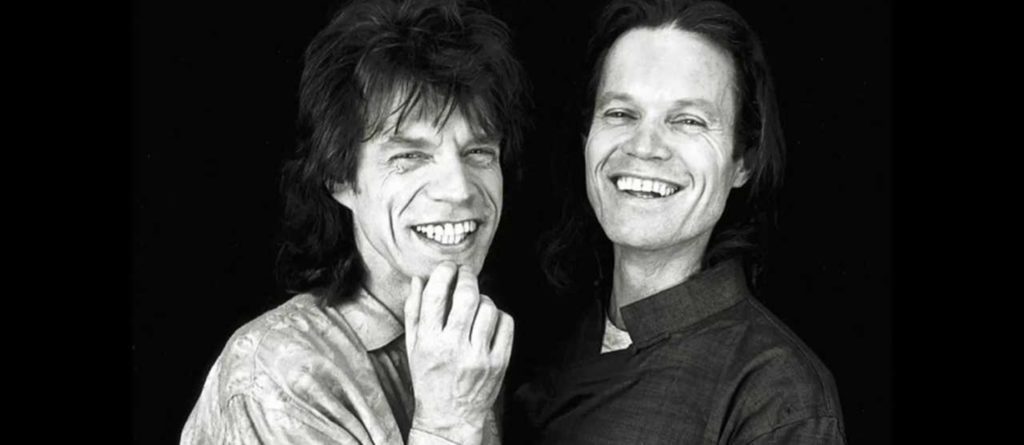
Following Chris’ latest sell-out performance at the Crooked Billet, he agreed to be interviewed for Maverick Chris Jagger, younger brother of Rolling Stones’ frontman Sir Mick, has pursued his own musical career for many years. His strong performances of original American country-influenced, Cajun and blues-tinged material have earned accolades from professional critics, fellow musicians, discerning fans and music business cognoscenti. But Chris lives a relatively quiet and conventional country life at his Somerset farmhouse home. Now 65, Chris has trained as an actor, been involved in stage management, fashion design, journalism, radio and film, as well as also having driven taxis, though it is music that has been a constant theme throughout his life. Chris has recorded a series of albums featuring his own songs and has toured extensively in the UK, Europe, Australia, Canada and the USA. His favourite venue is Oxfordshire’s celebrated Crooked Billet pub in the village of Stoke Row where he appears regularly with an acoustic trio. Chris is one of the most popular acts to perform there, which is quite an achievement given the famous names the Crooked Billet attracts. George Harrison, Joe Brown, Chas Hodges, Jon Lord, Hazel O’Connor, Gary Booker, Sam Brown and many internationally famous names from jazz, folk, country and rock, as well as from film, theatre and TV, have been regulars in this tiny gem of a venue, run by master-chef and former rock musician, Paul Clerehugh. Following Chris’ latest sell-out performance at the Crooked Billet, he agreed to be interviewed for Maverick. Not long after the Rolling Stones’ triumphant 50th anniversary concert at London’s O2 Arena, I travelled into deepest rural Somerset to meet Chris who had been tending the small flock of sheep he and his wife Kari-Ann own. “We really relish our lifestyle down here,” Chris tells me. “We have been in Somerset for more than a decade now-we lived in Glastonbury before and it is just so much better than living in Muswell Hill, North London as we used to. There is a real sense of involvement with the local farming community here. In remote rural areas like this there is a mutual dependency as well as an acceptance of everyone, regardless of who they are. And a lot of bartering goes on which I enjoy; exchanging a few dozen eggs for some locally made cider, borrowing a cockerel or a ram. It is still a traditional way of life which I’ve come to truly appreciate. Some of the highlights of the last few years have been performing at annual gigs for local people in the cider barn just yards from here. A few of my recent songs reflect my Somerset life-a track on my THE RIDGE album is called The Farmer.” This bucolic existence is a contrast from Chris’ late teenage years at the heart of “swinging’ London in the sixties. After a childhood in Dartford, Kent where he enjoyed singing in the junior school choir, Chris attended Eltham College in South East London. His father, a former history and PE teacher who worked for the Central Council for Physical Recreation and wrote books on sport, was not wealthy. So sending Chris to this prestigious private school meant a considerable financial sacrifice. Chris then won a place to study drama at Manchester University, but he opted not to go, preferring instead to spend time in London where elder brother Mick was enjoying his first years of fame as a Rolling Stone. “Our parents had always tried their best for us and I am sure they were disappointed I didn’t go off to university,” Chris reflects. “There had been very little music or acting at Eltham College. Despite that, I had thought I would like to do drama. But when I went to Manchester for the interview it just seemed so drab and stuck in the past. London was such a happening place. The thought of leaving all that action to go back to college to read Shakespeare up in Manchester was very unappealing. So I didn’t do it. There are times I’ve wondered what I missed but on balance, I’ve few regrets.” “Instead I took a year off and hung out in London with some of the people Mick knew. I was mixing with them all-the Beatles, Jimi Hendrix, all kinds of people. It was very exciting! I was involved with fashion design-our jackets were worn by Mick and by Keith Richards. Jimi Hendrix wears one on the cover of his ELECTRIC LADYLAND album! That jacket is now on show at the Hard Rock Cafe in New York-a piece of sixties psychedelic fashion. It was designed for us by Julia, an Irish girl we met who used to paint ties in Indian ink. We asked her to use the same technique on a jacket. Jimi wore a lot of our stuff and we became good friends. I even went out and toured in Sweden with him. I saw him play three gigs in one day there-only Jimi could have the stamina to do that!” “I also worked at Hampstead Theatre as an assistant stage manager which I enjoyed. Though it was a little disillusioning,” Chris recalls. “Meeting older actors who were broken down characters with alcohol problems and earning a pittance despite having real ability-I started to wonder whether I could hack that as a career, longer-term. But I enjoyed some of the new, more avant-garde plays. Many years later I was in repertory at the Citizens Theatre in Glasgow. I was in one play with Pierce Brosnan and also worked with Ciaran Hinds. I did The Threepenny Opera and had to sing some Brecht songs, which I loved. There was no amplification and a full house in a big Victorian theatre, so it was challenging and I learned so much from it. I also trained in Los Angeles with Stella Adler, a very famous coach. And I was cast in the Kenneth Anger film Lucifer Rising but I was fired when I queried

Maverick interviews Chris Jagger Read More »

Amy Speace

Singer-songwriter Amy Speace got her big break in music when she was spotted by Judy Collins. She didn’t actually start writing music until she was about 28 years old; she had enrolled at college to study English and Theatre but was still unsure of her future path in life. “I didn’t know what I wanted to do, I had all this performing in me. I was a musician, I played the piano when I was three and sang, I thought I wanted to be an opera singer for five minutes, because I love opera and I love the passion, but I have never met an opera singer who was really happy, loose and free.” After college Amy attended the National Shakespeare Conservatory to study acting but found that she ended up having to take a lot of sub-par acting work to make a living, this disappointment helped steer her towards music and her eventual calling. “At the time I started writing music I was living in New York City as an actor and a director, I just started playing open mics and I think maybe it was part real hard work and part blind faith that I was at a coffee house when Judy Collins heard me. I really was undeclared at that point, like all I knew was that I had to be on stage and I had something to say, but wasn’t sure what it was, or how? Whether it was to be as a play writer, or a songwriter, or an actor, no idea? Then Judy saw me and she told me how I reminded her of herself at a young age. Then I was able to open up to her and say: “I’m not sure how to do this and have a career?’ and she just said: “You have it, just keep going.’ I think that was the turning point for me, so it kept me going. It actually was the moment that I decided that I am a songwriter and singer and this was what I wanted to do for the rest of my life.” Amy’s albums tend to draw on what is happening to her at the time of writing the songs. THE KILLER IN ME followed a divorce and LAND LIKE A BIRD was written just after moving from New York to Nashville about two and a half years ago. “My album THE KILLER IN ME was really me trying to make sense of my divorce. I was married for 10 years, he’s a good friend of mine but never was my soul-mate and I think a lot of people find themselves there. I think I was trying to do the right things for much of my life. That record was like an exploration of that stage of my life, as in I am no longer 20 so how do I shed all of this and get out of this without hurting anybody. So when I finally did emerge from that I was living by myself and it is like when you are desperate to kick down a door, banging your head against the door, then somebody opens the door behind you and says “no, come to here’ and that is what happened with Nashville.” “Over the years I have been going to songwriter festivals in the States and I needed a Nashville songwriter to say that I need to be in Nashville. I had angels all over the place, songwriters like Jon Vezner who became a mentor of mine, so did Judy [Collins] and Beth Nielsen Chapman. Then I randomly ran into the guy who runs my label, who heard me and just said: “I want to work with you and you really should come to Nashville.’ He introduced me to this whole sort of sub-culture of Americana singer-songwriters in Nashville. I felt so at home I moved there on a whim, like two weeks later my van was packed and I was gone. I left behind my whole family, an ex-husband, my label and management and started all new in Nashville.” This led nicely into her next album LAND LIKE A BIRD, which is centred around leaving people and places close to her and it has a few songs that say goodbye. “Manila Street was a street that I lived near in Jersey City, right across the river from the Trade Towers. That whole episode was a turning point for me, so when I lived across from that area, this one street I would have to go down on the way to the subway train to get into Manhattan, where I played music and worked. It was a kind of ugly block of houses, but they had woven these roses through the chain link fences that surrounded these graffiti clad concrete block buildings. I had been touring and I came home and they had burst into bloom and when I was moving and letting go of relationships and people in my town, that was the image I used to write that song, the idea of flowers and things just coming and going, the idea of permanence…everything changes, just kind of owning that and using that metaphor.” “I think Had To Lose was a kind of resignation to moving on, I feel like it is a hopeful song. The first line is “As I lose the love of my life I had to lose,’ sounds really sad but the whole song has this sort of uplifting thing about you had to do it, to get where you are you have to let go of some things that are painful. That is why I chose Galbraith Street which is Ron Sexsmith’s song, I feel like it comes right out of my song Had To Lose, I love Ron’s song as it is about letting go of childhood.” The other tracks on the album covered the other part of moving. “I think what happened was I was letting go of love as I

Amy Speace Read More »

Fairport's Cropredy Convention

8, 9 & 10 August 2013 Fairport’s Cropredy Convention is widely acclaimed as the ultimate celebration of folk-rock. Yet, increasingly, the tens of thousands of music-loving folkies who invade the normally tranquil village of Cropredy in North Oxfordshire for three days each August, are treated to a more eclectic range of quality music. Festival founders and folk-rock originators Fairport Convention are still the principal Cropredy headliners, but the bill this year includes several distinctly non-folk performers such as 10cc, Levellers and Nik Kershaw. Plus, amazingly, the original shock-rocker Alice Cooper will also be there this year to terrify regular Cropredy-goers with his stunning horror-fuelled stage-act on the opening night. At the other end of the spectrum are the classical chart-topping Mediaeval Baebes with their beautifully evocative musical adaptations of medieval writing sung in a variety of languages, all prettily accompanied by antique English instruments. Nick Dent-Robinson talked to members of Fairport Convention about this year’s festival.And he sought reactions from Mediaeval Baebes’ singer Katharine Blake plus the inimitable Alice Cooper about the prospect of them appearing on the same bill at Cropredy 2013. “I’m just sitting here trying to figure out how we do our songs in a kind of folky way for the Cropredy festival,” Alice Cooper laughs, as he talks to me during a brief break in his current East Coast US tour. “But, hey, we just love to terrorise those groovy, green-worshipping, tofu-chomping folk-rock followers. We play some folk festivals in the US and it is always fun. Like going to summer camp-and then here comes Alice Cooper on at midnight…some terrible ghost, spooking all the kids and wreaking mayhem and horror at the end of camp-out. We’ve always enjoyed our scary reputation-and still do. We’ll give the Cropredy crowd something that’s totally the opposite of everything else they’ll be seeing and hearing!” “Our act is pure rock vaudeville, dark in places, funny in places but with huge pace and there’s no chance for anyone to catch their breath. The theatrical effects have improved down the years. Now we have this thing where Alice comes on stage in a huge shower of sparks, like a walking ball of fire-and you always hear this great gasp from the audience. I love that because it means, ‘We’ve got ’em, we’ve got ’em already!’ I never go out there thinking, ‘Boy, I hope you like us tonight.’ I’m like, grab ’em by the throat…make ’em like you! “Of course I’m one of those guys who knows people want to hear all the hits and we never shy away from that. There were 14 ‘Top 40’ hits and we do them all, as close to the original as possible. Underneath the theatrics which we hope everyone will enjoy, we are a guitar rock band and we have three brilliant guitar players-so I let them play…great live, raw music. Plus we always end with Elected and School’s Out otherwise our audience would wonder what we were doing. Though we have a lot of younger fans and, sadly, in this modern electronic, techno-age, a lot of these kids have never seen real, live rock music. They’ve never seen a drum solo or a good guitar solo. In fact the retro part of our show is new to them. Many of today’s major bands have everything taped, but we could never do that…my band has got to play every note for real. I’d be so embarrassed if we didn’t. Despite our reputation for theatrics, the music is important to me-and always has been.” It is 41 years ago this Summer-back in 1972-that Alice Cooper’s video for School’s Out was banned from the BBC after complaints from pioneering broadcasting standards campaigner, Mary Whitehouse supported by the MP Leo Abse. This gave Alice massive publicity and School’s Out reached number one in the UK charts within days. Alice responded by sending Mary Whitehouse big bouquets of roses to thank her for the publicity. “I remember all of that well. It was the greatest single career boost I ever had. Fantastic! Being banned, creating controversy, was all part of the career passage for Alice Cooper. It wasn’t planned but we never shrank from exploiting it, either. I am eternally grateful to Mary Whitehouse.” These days Alice is almost an establishment figure, though. He and his original band members were inducted to the Rock and Roll Hall of Fame in 2011 and he has a star on the Hollywood Walk of Fame. He owns a restaurant, enjoys classical music, hosts a popular radio music show and his biggest passion is golf which he plays to professional standard. “Yes, golf is my new addiction,” agrees Alice. “I used to drink every day but now I play golf; it is therapy. Though it is frustrating on tour to get to places with fine golf courses and discover they are closed at the times I am free to play. Britain has some of the best golf courses anywhere and if there’s good golfing near Cropredy, I hope it will be open when I am there.” “The early days in England for me were really great,” recalls Alice. “You see almost all of my biggest heroes in rock were British. Starting with The Beatles. Their lyrics and George Harrison’s brilliantly economical, innovative guitar work are still amazing to me. George Harrison never played a single note that didn’t belong. And as soon as he got done, he got out. Many guitar players, they noodle. It is nervous energy and they just noodle when they are playing, filling all the spaces that don’t need filling, spaces that ought to be left there. George never did that. He never played over anything. “That’s partly why The Beatles music is so great…nothing was ever allowed to get in the way of anything else. They had a brilliant producer in George Martin. But The Beatles had developed this economical style in their live performances. The vocal is always clear and then when the guitar comes

Fairport's Cropredy Convention Read More »

New To You… Jules Winchester

New To You… JULES WINCHESTER It is not often that respected professional musicians press me to interview someone who just released a first album-but that is what happened after Jules Winchester launched SOMETHING IN THOSE EYES, her debut album. The record is a joy, as has been widely recognised by the music press. Every track on it is strong and the album showcases perfectly the mellowness and range of Jules’s attractive voice, her talent for writing affecting lyrics with lilting melodies and her clever arrangements for acoustic and electric guitar plus keyboard. Jules, a young and energetic 39, has been writing songs and playing her guitars and keyboard for a quarter of a century. And for two decades she has been busily recording her work at her Sussex home. But it was not until 2009 when Jules met and started singing with Doris Brendel (of The Violet Hour and daughter of the world-renowned classical pianist Alfred Brendel) that her potential as a writer and performer was finally recognised. As Doris has recently commented, “If Jules had started playing live 20 years ago she would already be a household name.” Many others share that view. So, now that Jules is finally out there, performing live gigs and with her album promoted in the music magazines, it seemed timely to talk to her-as people were insisting I should. We meet on a sunny summer’s day in the pretty tudor-style cottage near the sea in West Sussex which Jules shares with her husband, BMW technician Alan Winchester. “From a young age I always loved music,” Jules recalled. “My mother plays piano-she’s learning the clarinet and mandolin now-and my brother Neil played a bit of guitar, so there was a lot of music at home. The first tune my mother taught me on a battered old guitar we had was Elvis Presley’s Wooden Heart. My parents listened to Elvis but also to Glen Campbell, Connie Francis, John Denver, the Mamas and Papas plus Joe Brown. They still go to see Joe Brown whenever he is playing locally. He’s a great guitarist and really good to hear live. I have always liked The Pretenders and admire Chrissie Hynde but my own major influences were the American singers Tori Amos-who is classically trained and a brilliant pianist and songwriter-along with Tift Merritt, Allison Moorer plus Trisha Yearwood. I love anything with a good tune, nice harmonies and an interesting lyric. One of my favourite songs is Dreaming Fields by Trisha Yearwood which is one of many beautiful compositions by American singer Matraca Berg. It’s a wonderful song that always reminds me of my grandparents who are no longer here…makes me reminisce. “By the time I was eight I’d had guitar lessons and was picking out tunes and singing along-I always had a good ear. Then I started to write songs and in my early teens I went to a nearby studio to record a song I’d written called Tears of Love. The local radio station-now Heart FM-played it but I was never able to persuade a record company to use the song. Later I bought a 4 track mixer and, with a guitar and a keyboard plus a recorder, I started putting my music together at home. Technically it was a challenge but I always persevered. I did Music ‘A’ level at school and gradually I taught myself how to do interesting arrangements, too. I kept adding to my recording equipment so after a while I could make quite good quality cds. “Then I had one of my songs-Walking Up The Aisle-recorded in Nashville. Later I visited Memphis and Nashville but I still failed to get anyone interested in releasing the song. There were lots of rejections, but I never lost heart. All the time I was trying to perfect my song-writing, improve my arrangements-trying to keep it simple but interesting and memorable. I’d accumulated several guitars-a few acoustic guitars and a Fender Telecaster. But the thing I treasure most-apart from my husband! -is my Gibson guitar. All of this helped my recording work. Most of the time I just shared what I was doing with family and a few close friends. Everyone was very supportive, as they still are. At one point I did try singing and playing with a band but the others seemed more interested in making quick money; I just wanted to perfect the music. So I went back to recording on my own at home.” “Things finally changed in 2009 when I met Doris Brendel. Initially we were in touch through MySpace. Doris was making her album THE LAST ADVENTURE with guitarist and record producer Dave Beeson and she invited me to do some backing vocals. I found myself singing alongside professional performers like Aitch McRobbie, Lynne Butler and Julie Harrington. They made me so welcome and I learned such a lot from them…it was a really good experience.” Jules is too modest to tell me this, but Doris Brendel was very impressed with her. She suggested Jules record one of her compositions-The Book-professionally with Dave Beeson and Doris provided the backing vocals for Jules. This song now appears as the last track on Jules’s SOMETHING IN THOSE EYES album. Doris also encouraged Jules to start performing live in small venues. “I began performing in local clubs. There is one in Arundel and another in Pulborough that is run by Gary Holder, who is a friend of Herbie Flowers, the brilliant bass player. I was terrified at first but the audience reaction was really good. I remember singing Country Roads at Pulborough and suddenly the audience were all singing along and clapping and cheering at the end. People were coming up to shake my hand. I was overwhelmed…a wonderful experience to get that sort of reaction. But I have been lucky, audiences often respond really positively to me.” Jules has now gained a lot more experience, playing live. She’s appeared at many Sussex venues including The Willows Folk Club, Findon

New To You… Jules Winchester Read More »

FOLK – A film by Sara Terry

A film by Sara Terry Sara Terry, the producer/director of FOLK, is an award winning journalist-in print, public radio, and photojournalism. FOLK is her second documentary. The project web site describes FOLK as “a verite character study, part music documentary, part road trip movie-a multi-layered examination of three artists at dramatically different points in their lives, faced with the challenge of how to be heard in the 21st-century version of this distinctly American art form.” Is it distinctly American? FOLK opens and closes at the annual-late February-International Folk Alliance Conference in Memphis, Tennessee, albeit separated by 12 months. There we meet the central characters-Dallas based solo artist Dirk Hamilton, Austin’s Flying A’s-husband and wife duo, Hilary Claire and Stuart Adamson, and finally the trio of California based John Elliott, Texas immigrant Raina Rose and New York’s Anthony da Costa, supported by Californian Andrew Pressman (upright bass) -and witness them dealing with life over a period of twelve months. Seeking, at the outset, to define the 21st century musical contexts of FOLK, relative to the fame (and therefore financial) factor, James Lee Stanley offers “Nobody here thinks they’re going to become The Beatles. Everybody is here playing music because they love it to death, no matter what that costs.” Radio producer Jen Hitt highlights the genre’s tradition and roots “Folk music has always been a personal experience-meet your audience, remember your audience-there’s the basic economics of it, folk can’t exist without community. When you’re not targeting a mass audience, when you’re targeting people’s hearts and minds you need that community to support that endeavour.” Finally, music critic/author Dave Marsh employs a snapshot from the past and suggests a future possibility. “Charles Seeger, Pete’s dad, used to say that you measured a country by the number of people who made music in that culture. We need to get back to a culture where people make music for joy not for money.” Indiana born and raised in Northern California, currently aged 63, Hamilton’s back story runs to first making music professionally aged 15. Signed to majors ABC and Elektra/Asylum during the mid/late 1970’s, thrown off a Warren Zevon tour-NOT his fault-Elektra dropped him. He stopped making music for a time. There are shades of Detroit’s Rodriguez in Dirk’s early 1990’s discovery that he was a rock star in Italy. For two decades his income has mainly come from touring there. In FOLK…Dirk collides, head on, with unfamiliar “networking” avenues at IFA, and recalls frequenting The Roxy in the 1970’s-a rock club. Failing to prepare a picture postcard listing his private IFA showcases he groans “I grew up with managers and I think I got spoiled.” Out in California, Dirk performs Thug Of Love in McCabe’s Guitar Shop, a long established Santa Monica folk club and wanders the beach area where he once lived. Former Rolling Stone reviewer Steve Pond describes Dirk as “Cranky and weird. He never made any bones of the fact that he hated the music business.” A friend from 30 years ago, Patti Hartman, finds him and begins directing his career. There’s archive film of Dirk and his electric band, circa 1979. Dirk takes his kids for pizza, teenage guitarist Chavis and young Phoebe. “I have real relationships with them. I miss no opportunity to tell them I love them.” In NYC for a gig, Dirk witnesses a protest march by young people. “This is like the 1960’s, I never thought I’d see it again.” Dirk is seen performing in Italy. At the close he reflects “I’m always growing as an artist. I love what I do. It’s hard for money.” A year on in Memphis, postcard in hand, he reflects “I love everybody, I’ve learned.” Both previously married, Hilary and Stuart Adamson first appearance is at a private IFA showcase. Hilary met Stuart at a Kerrville Folk Festival song circle circa 2005. She attended Kerrville Song School to learn to play guitar. They began working together. “He needed a harmony chick on his second album.” Stuart “We came together when we really needed each other.” At the legendary Ardent Studio, with producer John Jennings (Mary Chapin Carpenter), Hilary records a vocal. Jennings calls her “A force of nature” and adds “In a fair world, half the songs on this record would be big hits.” In a tearful scene Hilary confides “This whole music thing saved my life,” is seen co-helming an IFA house concert seminar, and teaching an Austin school choir. Stuart reflects “I was teaching full-time. I’ve been substituting some. Trying to keep my head above water then life happened.” On local tv station K-EYE they’re seen performing. Driving home, they dream of performing on Austin City Limits, Letterman, Saturday Night Live and the Grammy Awards. There’s a segment from the Flying A’s debut on Kerrville’s main-stage. Unlike Hamilton, we don’t see Stuart’s kids. Financial pressures eventually dictate Stuart returns to teaching, while Hilary tours supported by Austin musician Danny Britt. Stuart “I don’t want it to end.” They go for marriage counselling. Hilary “There were times when I thought I was going crazy. He had a really tough year.” As for their music “It’s not about the dollars at all. This is my life and I love it. It’s such a gift to have a husband and a partner in life and in music that feels the same way.” While Elliott, Rose and da Costa are seen criss-cross the country “on tour,’ the focus principally falls on Austin based Raina and boyfriend Andrew. At an IFA showcase the trio are seen performing Elliott’s Love Found Lost and Rose’s Let Me Down Easy. Raina “I love playing with other people, I love harmonies. That’s the one thing I miss about being solo, there’s nobody to sing with.” On life as a performing musician, “The major labels are dinosaurs. The independents are wonderful, but there’s too many of them. The internet created a middle class of musicians, but also created a lot of white she noise. Any way

FOLK – A film by Sara Terry Read More »

Scroll to Top