Exclusives

alison krauss

Interview: Alison Krauss – Gal Power

Four years in the making, Alison Krauss’s first solo album in 18 years – Windy City – was anything but plain sailing. But, as the bluegrass star tells Paul Dimery, she overcame the turbulence to emerge triumphant. Alison Krauss sounds a bit fed up. An afternoon of phone interviews has left her hoarse and exhausted, and now she’s struggling with my British brogue and a transatlantic phone line that insists on cutting out every few minutes, leaving both of us hanging in mid-air. After exchanging niceties, I begin our interview proper by asking for a personal recollection of her formative years, before she rose to fame as one of the world’s biggest country stars and began collecting Grammy Awards for fun (she has 27 to date, making her the most prolific living recipient along with Quincy Jones, a man 38 years her senior). There’s a long pause at the other end of the phone as she casts her mind back through her career. A very long pause. Then a crackle. Nope, the line has gone dead again. It wasn’t supposed to be like this. Originally, Country Music was set to meet the Illinois-born bluegrass sensation in person, in London, prior to an intimate gig at the BBC’s Maida Vale Studios where she would showcase her new album, Windy City. But a throat infection meant that Krauss had to cancel her visit to the UK at the last minute, and so here we are, trying to overcome tiredness and technology on either side of the Pond. No wonder she’s feeling frustrated. “I’m still not completely over [the illness],” she rasps when the connection finally remedies itself. “It was only supposed to last about three weeks, but it’s not letting go.” Early virtuosity Her downbeat nature today jars with those oft-recounted tales of the wildly talented ingénue who entered her first fiddle contests aged eight, laying waste to her rivals with thrillingly offbeat renditions of The Beatles and Bad Company; formed her first band at 10; and discovered bluegrass music at the tender age of 12, taking a shine to banjo stalwarts Ralph Stanley and J.D. Crowe while her school mates were listening to Cyndi Lauper. When the Society For The Preservation Of Bluegrass in America labelled Krauss the ‘Most Promising Fiddler in the Midwest’, and Vanity Fair magazine followed suit by describing her as a “virtuoso”, she’d not yet reached her 14th birthday. “I would just show up and do my thing,” says Krauss, recalling those early competitions with a modesty that belies her lofty achievements. “I don’t remember being goofy or nervous about doing them at all, and I think that might’ve been irritating to my folks. They felt like I should be taking things a bit more seriously or realise what was going on, but I don’t remember being terribly aware.” It was Krauss’s mother, Louise, who’d first set young Alison on her path to musical destiny, encouraging her daughter to learn the classical violin at the age of five. But Alison soon gave that up to pursue what she deemed to be her true calling in life: “I liked fiddle music a lot,” she explains. “I would spend hours cassette-recording the famous fiddle players and learning the tunes that other people did. I studied how they held their bow and tapped their feet, that kind of thing.” She proved to be a natural; indeed, such was her skill with the instrument that she quickly found herself in demand among seasoned artists looking for session talent. One of those, bassist and songwriter John Pennell, was so impressed with this fresh-faced starlet, he invited her to join his band Silver Rail (later to become Union Station). It proved to be a match made in heaven; Krauss’ energetic performances with the group helped to earn her a deal with Rounder Records – putting her on the same label as one of her childhood heroes, J.D. Crowe – and while Pennell eventually drifted away from the line-up, his protégé has recorded and toured with them prolifically ever since. In fact, we’ve become so used to Krauss performing with Union Station, it came as something of a surprise to learn that, though certain members of the band make cameo appearances on the recording, Windy City is officially a solo venture – Alison’s first since 1999’s underrated Forget About It. In those 18 years Krauss has contributed bluegrass tracks to the Coen brothers’ Hollywood hit O Brother, Where Art Thou (2000), appeared on stage at the Academy Awards, where she performed two nominated Appalachian songs from the movie Cold Mountain (2004), and recorded a successful rock/folk crossover album with Led Zeppelin icon Robert Plant (2007’s Raising Sand). So what was the thinking behind this career curveball? “Every now and again, I’ll do a record without the band,” she answers matter-of-factly. “We all do it from time to time. I haven’t done one in a long while, but it didn’t feel weird at all. I don’t do anything that I’m not inspired to do.” Nostalgic tribute In this case, her inspiration came from the past – specifically her own past. Windy City is a gloriously nostalgic scrapbook of Krauss’s favourite country songs – 10 standards and rarities originally recorded by artists as diverse as Willie Nelson, Roger Miller, Eddy Arnold and The Osborne Brothers – all lovingly recrafted in her own inimitable style. “I wanted to sing songs that are older than I am,” she told Rolling Stone magazine in the build-up to the album’s release. “There’s a real romance in singing other people’s stories.” It’s a brave yet brilliant record, and listening to Krauss’s hymnal longing on Brenda Lee’s All Alone Am I, or her tender vibrato on Glen Campbell’s Gentle On My Mind, it’s hard not to feel that Windy City is the LP she was always destined to make. And yet, recording it was anything but a breeze. While sessions began in 2013, it was another four years before the album

Interview: Alison Krauss – Gal Power Read More »

lewis & leigh

Interview: Lewis & Leigh – On Fire

Meet the cross-Atlantic, harmonising duo who draw on their sense of home for inspiration – by Steve Faragher. With their mouthwatering close harmonies, great songs and very personable stage presence, Lewis & Leigh look like a pair of singers with no ceiling. While they’re definitely country, they bring an exciting modern twist to their lyrics that makes them sound quite unlike any other act in these pages. Formerly two solo artists in their own right, Al Lewis from Wales and Alva Leigh from Mississippi met at a Matthew Perryman Jones gig in London in 2013. “I’d worked with Matthew in Nashville,” explains Al. “He had this backing singer with him and I got him to introduce us.” The pair struck up an immediate rapport, and before they knew it were writing songs together. Al expands: “We said ‘let’s pencil in some writing, then’ with no other plan than for it to perhaps appear on one of our solo albums.” So was it exciting to work together from the start? “Day one, the first thing that excited me was the song What Is There To Do, Al continues: “It sounded really good, but Alva did the singing on that first one. It wasn’t until a bit later that we started really singing together.” “Yeah,” Alva takes up the tale. “We didn’t think about arranging it as a duo song till later. But then we realised we had something special. It was a wonderful surprise.” Suited to each other You may never have heard two voices so suited to each other. “I always laugh that maybe I have Welsh blood, and Al and I are long-lost cousins. There has to be a reason we sing so well together.” A good-looking pair, Al comes across as the more business-like of the two. Clearly driven, he’s jumped through some music business hoops already to get to where he is today. Alva’s more prone to laughing, but equally serious, and also has a solid history of music-making behind her. But they took it slowly when it came to making music together. It was six months after that meeting, in early 2014, that they wrote their first song, and over the next few months they went on a journey of musical self-discovery via three EPs. “Each EP, we explored different influences,” says Al. “The first one was straight down the middle country; we used pedal steel and every single instrument that we thought signposted country, like mandolins and all that.” Alva continues, “The second EP was more folk noir. Very dark, brooding songs with some fiddle and banjo and Al got a beautiful new guitar, a 1965 Gibson with a beautiful tone. That guitar inspired the second EP. And then on the third we went down the big band/southern soul rock vibe with a horn arrangement.” The album doesn’t sound much like any of those, but is the big band something that might appeal to them later on in their careers? Alva laughs: “Well that would be fun, but we do know that what we have at the moment works, and when you add more elements sometimes it does make it better but sometimes it dilutes what you have.” So having experimented, what did they decide on for their first album? “They were very different EPs and we didn’t feel we could just mush them all together and make an album, so we decided to start from scratch,” says Al. “I think it was good that we entertained all these different kinds of influences that we have,” Alva continues, “and so when it came time to make the album we started from scratch. We said, ‘let’s strip this all away and see what’s left and also look at our live set and see what we can do there, because we won’t be able to tour with a horn section, much as I wish we could’. We wanted the album to be simple and to come back to what we did in that first songwriting session where it’s just two voices and a guitar.” Chicken noodles in broth The album was recorded over a cold period in London at a studio where Laura Marling had just made her critically-acclaimed album Short Movie. It was so cold they still fondly remember going out every day for a bowl of Vietnamese chicken noodles in broth to warm up. But in just two four-week sessions the album was done. Opening track There Is A Light sums up the newly-discovered, stripped-back sound perfectly. Starting with just a harmony, sparse instrumentation fills in the almost-hymnal structure of the song, but where did the inspiration for it come from?” “There Is A Light is about where we’re both from,” says Alva. “The first verse is about the house I grew up in, and that feeling of home. But neither Al nor I live where we’re from; we’ll probably never live where we’re from.” Al explains: “We both grew up in small places. Alva is from a small town on the Gulf Of Mexico called Gulfport and I’m from North Wales, and we both have really fond memories of how we grew up, but we never see ourselves living in a place like that again.” So where do they live now? Al’s based in Cardiff, and Alva in Oxford. And how does the songwriting process work for them? Al explains. “We each bring something different and we help each other in our weaknesses. I tend to think about the big picture of a song – you know, the chorus and the need to grab people, whereas Alva is more about the details, the things you pick up on listen three or listen four, whereas I’m like, ‘let’s not worry about that’. So I think we complement each other well.” Lewis & Leigh are already catching on in Germany. They’ve already been snapped up by German TV for a guest appearance on a flagship show, and you can imagine their intense personal harmonies working

Interview: Lewis & Leigh – On Fire Read More »

olivia newton john

Interview: Olivia Newton-John – Songs From The Heart

Olivia Newton-John and Beth Nielsen Chapman tell Kieran Kennedy about their new album with Amy Sky. Not since Dolly Parton, Emmylou Harris and Linda Ronstadt united on Trio 30 years ago have three voices harmonised as beautifully and movingly as they do on Olivia Newton-John’s collaboration with Beth Nielsen Chapman and Amy Sky, Liv On. What makes the new album all the more powerful is that every song was crafted by the threesome to bring hope, comfort and healing to those suffering bereavement, battling illness or enduring trauma and grief of any kind. It’s an album that comes from the heart, because all three of the singers have had their share of loss or life-threatening illness, and each knows the special power of music to heal the soul. “The album was really inspired by the loss of my sister three years ago,” says Olivia, who enjoyed a string of country hits in the 1970s, before teaming up with John Travolta for the iconic musical Grease and going on to score poppier hits, such as Physical, in the 1980s. “I wrote a song about her as a way to help me heal from the experience because she died pretty quickly and shockingly,” the Australian songstress continues. “I asked Amy if she would help me finish the song, because we had worked together before on my album Grace And Gratitude. “Amy had just recently lost her mother, and we were talking about the fact that there is very little music for people going through loss and grief. I had the idea of doing an album about it, and we asked Beth if she’d join us, because I thought it would be a great sound with the three of us.” “Olivia called me and it sounded like a perfect fit for me,” says Beth, who has written seven number-one songs, including the Faith Hill smash This Kiss, and Willie Nelson’s Nothing I Can Do About It Now. “I’ve written songs about coming through grief over the course of my career,” continues the singer-songwriter who is also well known for her song Sand And Water – a favourite of Elton John’s – which she wrote following the loss of her first husband to cancer in 1994. “Most of the things that happen to me, I sort of write my way out of it. So I was already dialled in on that.” Beth and Olivia have been close friends since Olivia helped Beth through her treatment and recovery from breast cancer in 2000 – an experience that Olivia herself had been through eight years before. “I met Olivia through Annie Roboff, with whom I wrote This Kiss,” Beth remembers. “I didn’t know her well, but when I was diagnosed, Olivia called me and she was incredible. She totally came by my side. She put me in touch with her doctor and helped me get some questions answered very quickly. She checked in on me, she was incredibly supportive and we became friends through that, immediately.” Raising Awareness Although Beth didn’t know the Canadian singer-songwriter Amy Sky very well before they began writing the songs for Liv On, the project was a bonding experience for the three women Beth now calls “my girl tribe!” “It was wonderful. We got together a few times over the course of a year and would spend two or three days at a time writing, sharing our stories and eating snacks – that was a big part of the process! A lot of our personal emotions went into the songs and we worked very hard on them.” Beth adds: “There’s not a lot of uptempo songs. We felt that when you’re broken up over losing somebody, or in some sort of grief, whether it’s a divorce or some terrible thing in your life, you want something gentle and soothing. “We wanted it to be comforting, and melodic, so you’d be drawn back and want to hear it again.” The album’s title song was inspired by an awareness-raising campaign by the Olivia Newton-John Cancer Wellness & Research Centre in Melbourne, Australia, which the superstar had raised funds to build in 2008. “They were using a poster on which they’d highlighted some of the letters of her name to spell Liv On,” Beth explains. “Olivia said, ‘I think that would be a great song title,’ and I said, ‘Are you kidding me? That’s a fantastic song title.’ So we wrote that with the intention of helping to promote the hospital, and we’ve also made a video for the song to help the hospital.” “We’re encouraging people to share their stories online, of living on,” Olivia says of the video. “To encourage someone else who’s going through some kind of loss, whether it’s a loved one or even a pet. And to show you how to cry the tears that you cry and then live on and be grateful for the day. Because the song’s really about life and how lucky we are. That’s how I feel.” The first song on the album is an expression of empathy: My Heart Goes Out To You. Poignant Words Beth recalls how the song came about. “We were having breakfast one day when Amy got a text from a friend of hers, and her friend’s baby had died. We just thought, Aw, there’s zero words to take someone out of that depth of sorrow. And I think it was Olivia who said, ‘The only thing you can really say is my heart goes out to you.’ “We got up from the breakfast table, went to the piano and wrote that song in about 15 minutes.” “Sometimes when people lose somebody, other people don’t know what to say,” Olivia comments. “They don’t have the right words. So this song says it for you. You can give them the album, and the song can express it for you.” As well as the newly written songs, the trio sing a moving vocal arrangement of Do Not Stand At My

Interview: Olivia Newton-John – Songs From The Heart Read More »

dolly parton

Interview: Dolly Parton – Simply Dolly

In our exclusive interview Dolly Parton bares her heart to Eve Barlow. Truly a people’s artist, Dolly Parton’s lyrical inspiration on her latest album, Pure & Simple, is the same as it’s always been. She famously titled the character of the song Jolene after a child with that name at the front of her show. She insists her new guitar-led album highlight Head Over High Heels, which references Adele, is no shrewd attempt at luring the biggest popstar of 2016 into the studio. It’s just about who she uses for make-up inspiration these days. “Ah! Don’t you love that song?” she says. “I was just writing it and I didn’t even mean to [namecheck Adele]. I started singing, ‘Put on ma high heels/Lips painted…’ and I was thinking about painting my eyes up and all of a sudden it just came to me – ‘…my eyes like Adele’. And I thought, ‘Oh I love that line’. All my little nieces, all my girlfriends, everyone’s always trying to paint their eyeliner like Adele, and I thought, ‘What a clever little line for that’. You always hear that saying, ‘I’m head over heels in love.’ Well, for me, it would be ‘head over high heels’. That’s clever, right?” This year Dolly also celebrated her 70th birthday. “Did you say 17?” she jokes. “I heard 17”. Another time-old saying is that age ain’t nothing but a number, and the track I’m Sixteen is testament to that – a song about how she still acts like a teenager in love. It was written about her sister. “She had two terrible marriages, they broke her heart and she was so devoted to both of them. She thought, ‘I’ll never love again’. So down and depressed. All of a sudden she meets this guy, they’ve been through similar stuff, they got together and they are so happy they’re like two little silly kids. I thought, ‘My God, they think they’re 16!’ That’s where I got the inspiration for that.” Feminism When it comes to her stance on feminism – a word she still says makes her feel uncomfortable – Dolly is quick to attest to the important males she’s looked up to throughout her life. “I never think about it like that [men vs women]. Every once in a while I’ll look around and think, ‘Oh my, I’m the only girl in here’. But I just always had what I had to offer. I grew up in a family of six brothers and my dad, my uncles, my grandpas. I was very close to them. I just understand men, I’m comfortable with men, unlike a lot of women. But I’m so, so proud of women – of us.” Even when discussing her former boss Porter Wagoner, who she co-starred with on The Porter Wagoner Show, and wrote I Will Always Love You about after parting ways with him, she’s gracefully measured. “He gave me a wonderful opportunity. I’ll always be grateful for that. He was a country boy and there was that inbred male chauvinist thing in him that a woman’s place is in the home. So when I started, and all of a sudden not only did I write songs but I sang them too, and had business thoughts, we clashed. We still need each other, men and women. We need our boys in their places and we need to be left alone to be in ours to do what we do. I think it’s wonderful that we’ve got to that point where we can be equal. Of course, there’s still a lot of work to do.” Staying Power Parton’s appreciation of men stems from the fact she inherited her acumen from her father, then built her career from it to ensure longevity and real staying power. “My daddy was a real smart person. Daddy was not educated at all but daddy had horse sense – that’s what we call it in the country, they call it street smart in the cities. That innate knowledge of what to do, what not to do, how to bargain, how to barter, my daddy was great at that. So I got my business sense from my dad. My daddy took care of everything, he counted every penny, he needed to know where everything was going, he had to. I learned that early on and I just applied that to my own business.” Parton played the long game and it’s worked. “I knew I didn’t wanna get hick-rich like so many young people do in the business. I didn’t wanna just make a bunch of quick money and then be gone tomorrow. This is a fickle business. You can have one or two hit records, or even just one, and think you’re the biggest star in the world and it never [takes off].” Passing down the generations, her god-daughter Miley Cyrus seems to have picked up some of that horse sense too. Parton doesn’t speak to Miley too regularly but the relationship there is authentic. “Don’t you love her?” she says. “I love Miley. We’ll send little messages back and forth now and then. I think the girl is so talented, so smart. She’s young and when she was going through all her stuff, she was trying to become who she is and that’s been hard for her, to crack through that other glass ceiling – that Hannah Montana entity – to be allowed to be Miley Cyrus. Everybody was so worried about her and I said, ‘Look, I’m not worried about her. I know she may be doing a lot of stuff but she knows what she’s doing. I don’t worry about how far or how high she jumps, she’s gonna land on her feet!’” Artistic Integrity Dolly knows how to fight for artistic integrity, too, having been criticised in the 80s in particular for turning her back on the country scene, and charging ahead into something more mainstream pop. “You have to do what you feel

Interview: Dolly Parton – Simply Dolly Read More »

ward thomas

Interview: Ward Thomas – Carry Them Home

Ward Thomas prove that there’s still magic in the country music business, writes Steve Faragher. If there’s one thing about country music that delights me, it’s that talent will out, and honesty will prevail. It’s like the American Dream, only real. If you’re super-talented, super-nice (and ambitious enough), then the gods of Nashville will smile on you. Don’t believe me? Too cynical to accept that? Step forward the case for the defence: Ward Thomas. It’s incredible to believe that, in 2012, two completely unknown 18-year-old twin sisters from rural Hampshire were writing an album, while completing their A-levels, that would reach Number 9 in the UK album charts and launch an international career that, just four years later, would see them being a successful headline act at festivals across the country and releasing (for Sony Music no less) one of the most eagerly anticipated country music albums of 2016. What’s even harder to believe is that, having just talked to them, I can honestly tell you that there is no meanness, no brattishness to this pair. What they are, though, is a lot more grown up from the heady days of their debut. “We worked first on Cartwheels about two years ago. That was the first song we wrote. That lead us in the direction of this second album. We decided to call the second album Cartwheels because when we played that song live on our tours in the UK it was a moment in the set when we realised this was the kind of music we wanted to be making, the kind of sound we were heading for. The reaction from the audience was really special as well. There’s a pause in the song during which you could have heard a pin drop. I watched the faces of fans, women mostly, and knew they felt the vulnerability of the lyrics. It was a magical moment.” It’s Lizzy (the blonde one, the press release tells me) talking to me on the phone from their tour car in Ireland. The signal keeps breaking up, but her sincerity is clear. Catherine’s also in the car, but on the other line, though sometimes she clearly leans over and interjects. “The first album, we wrote when we were a lot younger. We’re at a different stage in our lives. We wrote Cartwheels from our experiences and from stories we heard. It’s all about the experiences that people go through in their early 20s.” Apparently, Ward Thomas were always Nashville-bound, and it was all kicked off by their Canadian cousins: “Cousins from Canada came over and lived with us for a while when we were younger, and introduced us to all sorts of country music, but particularly the Dixie Chicks. The Dixie Chicks were the reason we got into writing songs and doing music. They were our biggest influence, and still are. We love everything about them.” So, heavily influenced by The Dixie Chicks, and doing their A-levels, they decided to write a hit album… “Our first album was a very unexpected hit for us, it was so exciting. We started writing it at school. The day after our very last A-level exam, we were flying off to Nashville to record the album. “I didn’t do very well in my last exam,” Lizzy adds. “I was too busy thinking about Nashville. All our friends were doing gap years or thinking about going to university, but not us. We knew exactly what we wanted to do, and we thought we could do all that other stuff later on. It’s great for us on tour, as all our friends are at university and so everywhere we go we’ve got someone to stay with – it’s very useful. We get to see them a lot.” That independently released first album, From Where We Stand, written at school and recorded in Nashville, sold more than 25,000 copies. The sisters went on to play two UK tours, including gigs at London’s O2 arena and Hyde Park along the way. But now they’re older, and with a second album and a seriously major record deal come different sorts of expectations, and a definite change in direction. Do Ward Thomas agree with Eric Church that there are no genres in music any more? “For this album, I think we’re very country-influenced harmony-wise, but there is lots of crossover and that’s great because it’s just a whole lot of music mixing in together. Country as a genre has a big meaning to it and it always has had: back in the day Patsy Cline and Loretta Lynn sang very heartfelt, emotional country music, Willie Nelson too, and it goes from there to Miranda Lambert and Eric Church, Kacey Musgraves, Taylor Swift – all very different kinds of music. All the songs have stories and they’re very authentic, and they all have real music; very live instrumentation, very honest. You might say that Adele has some country influences because her music’s very storytelling and honest. That’s what they all have in common.” So, how does their songwriting process work? “We co-wrote a lot for this album with two girls. Jessica Sharman’s from the UK too and Rebekah Powell is from Nashville [she’s the Nashville-bred daughter of revered hit-maker Monty Powell], and we met Rebekah in Nashville and we had a really great connection with them both. Four girls in their early 20s going into a room and pouring their hearts out, sometimes with a bottle of wine for the late-night writing sessions. “Catherine had ‘guilty flowers’, that phrase, in her head and we were talking about how it was a great title for a song, and we got into a writing room with Shelly McErlaine of Alisha’s Attic and Ben Adams from A1 and then we created the stories and the concept for that song with them. Other times, we might start with a melody and create from that, it’s different every time.” The girls have just finished a summer of festivals across

Interview: Ward Thomas – Carry Them Home Read More »

lucie silvas

Interview: Lucie Silvas – Another Country

Lucie Silvas writes from the heart, and that can be a pretty dark place, as she tells Teri Saccone. Fans of singer-songwriter Lucie Silvas can be assured that pretty much everything you need to know about her can be found in her wonderfully-crafted lyrics and music. Yet there is, of course, more to her than songs so we won’t deprive you of an interview. Before we get to that, however, we should mention that Silvas is in fact inextricably linked personality-wise to her music, and there is no pretence surrounding her. She’s as open, sweet, yet razor-sharp, as her lyrics suggest. Furthermore, Silvas is exceedingly bright and personable. For the release of her long-awaited third album Letters to Ghosts, Lucie returned to the UK (where she was born, she was raised for a time in New Zealand) to discuss her career, the ever-evolving music industry and the sweet life she has built in Nashville. Letters to Ghosts follows two prior studio forays for the Tennessee-based artist: Breathe In (2004) and The Same Side (2006). Her music may not be traditional country but she does embrace gospel, soul and rock within her palette. Technicolour Presence The prime motivator behind Silvas’ latest album (released Stateside earlier this year) was a past relationship which ended before her marriage to country guitarist John Osborne (he of Brothers Osborne). Letters to Ghosts’ lyrics reveal the dark and sometimes ugly side of break-ups. The pain is palpable within the tracks, whether the vibe is ballsy or sad, as Silvas is never beige: she’s always a technicolour presence. Says Lucie: “I wrote the album in the wake of the ending of a big relationship, and it was in the healing process of it that I realised the many things I had done wrong and the flaws I had. Until you’re ready to let go and start over, you’re in a holding pattern that won’t let you move forward. This album is the essence of that: of trying to move on, facing who you are, and changing too. Roots is a prime example on the album, glistening with that pure emotion Lucie purveys. According to her, Roots was “Especially cathartic because that plagued me for so long; so the whole letting go of the past part was liberating. Writing can be such a learning curve for my emotions. I was talking myself out of a storm. I still have trouble singing that one sometimes, as it feels more poignant to me than most.” Roy Orbison Another provocative cut off LTG is Silvas’ audaciously unique take on the Roy Orbison classic You Got It.“My parents used to play Roy Orbison a lot when I was a kid and I have always thought this to be the most perfect song. The recording is one of my favourite sounding records ever made. So I couldn’t just cover it in the same way or even attempt to live up to such a powerful original. I made it my own by bringing it to its simplest form: not much instrumentation, just piano and an electric guitar, and the vocals. The lyrics reflect the feeling of finding the kind of love that makes you feel so levelled and understood. I found that when I met John, and this recording is for him.” Inspired Performance Furthermore, her inspired vocal performance on Smoke proves that Lucie’s is a voice to be reckoned with. LTG is a good introduction for those unfamiliar with Silvas, as it contains a solid array of tunes with some very strong songwriting. Silvas grew up partly in New Zealand, where her father is from. Her mother is Scottish and was a budding singer but came from a strict Christian family who discouraged anything except classical singing. “And my dad is Jewish,” she tells us, “so I had a mixed upbringing both culturally and musically.” Lucie left London, relocating to Nashville, almost a decade ago. It wasn’t planned. Basically, an old English friend lured her there. “My dear childhood friend John Green, who I’ve known since we were 14, suggested it to me in 2007. We had a band as kids. He asked me to come and check it out and he said I’d meet great people – and the first time I was there I met people I’m still friends with today. So I went out for a few days but ended up staying five weeks and never saw England in the same way again.” Intoxicated “Weirdly enough,” she continues, “the music I’ve always done never made more sense to me until going there, and I fell in love with the place, and I saw people making music in a way that was more inspiring to me, and I was intoxicated by it. Little Big Town, Miranda Lambert and Kacey Musgraves invited me on their tours, so that helped me out. Living in London I felt like I had to have music or my personal life but not both, as I was travelling and it didn’t work out well. In Nashville, I saw artists who had a normal life and were pursuing their dreams. I want to have a life outside of music too. Being there in Nashville I have both.” Rootsy Americana LTG is mired in rootsy Americana with influences including soul and gospel. One track, Shame, embodies more of a Nashville vibe in its instrumentation and style. But instead of simply appropriating a country flavour, the sound has seeped into Lucie’s lexicon quite organically, not only from her life in Music City but also from growing up with the sounds of Haggard and Cash in her childhood home. We ask her if she thinks that she’s not as commercially-accepted as she might be because she’s not country enough for Nashville? “It’s been a long road,” she replies. “I just signed the deal with Decca in the UK and doing it on your own independently, as I’ve done, is hard, although a lot of people also do it this way.

Interview: Lucie Silvas – Another Country Read More »

vince gill

Interview: Vince Gill – The Mayor of Music City

20 grammys and countless hits later, Vince Gill is still at the top of his game, writes Paul Sexton. On our way to Nashville’s hallowed Ryman Auditorium, we mention to a record-company person that we’re going to meet Vince Gill. “Ah yes,” they reply, with a warm smile. “The Mayor of Nashville.” It may be an honorary title, but Music City has no greater ambassador than a 20-time Grammy winner genuinely loved and respected by everyone involved in the business, and many more besides. He’s one of those for whom no surname is required: it’s just Vince, country music’s close family friend, Nashville’s favourite adopted son for decades. Not bad for a bluegrass picker and Beatles fan from Norman, Oklahoma. When we meet backstage at the famed venue, known to all as the Mother Church of Country Music, Gill is sitting alone in a small room strumming and studying potential tunes for an appearance at an all-star radio showcase. We tell him about his affectionate appellation. “I haven’t been paid yet,” he laughs warmly. “But I love it here, I love to help out, I love to chip in and do my part, and I think I always have, ever since I’ve been here. I made my first trek here 42 years ago, and made one of my very first records here. So I’ve always been drawn to the city. I love the community of it, the spirit of it, the kindness of it. This place is surrounded with a lot of really kind people, and it makes you willing to want to help out.” There was, he confides, at least one moment of doubt, very early on. “I moved here from Southern California, which is 75 and sunny every day. I showed up here and it was 17 below zero. It was freezing. ‘What have I done?’ “I didn’t move here until ’83,” Gill continues, “but I made a boatload of trips here to work on records, and work with other people and tour, so I had about eight good years of a lot of time in Nashville and always felt like I would wind up here. That opportunity was finally the right time to come, and I’m not going anywhere else, that’s for sure.” All this time later, it was only right that, as the CMA Awards prepared to mark its 50th event last November, the all-star single Country Forever that marked the occasion featured Gill among its all-time greats, alongside Dolly Parton, Willie Nelson, Charley Pride, Ronnie Milsap, Randy Travis et al. As he prepares to turn 60 in April, Gill is a statesmanlike representative of the music and the city he adores. But his role is far more than that of a country figurehead. He’s as deep in the trenches of recording, performance and collaboration as he always was, and his diary for last year was as packed as ever, with two album releases inside just seven months. His elegant, 14th album in his own name, Down To My Last Bad Habit, was followed in September by a delightful new endeavour with his part-time compadres The Time Jumpers, entitled Kid Sister. Time traveller 2017 looks every bit as eventful. After finishing last year with his Christmas At The Ryman shows with his wife of nearly 17 years, Amy Grant, he’s swiftly back out on the road, and in March will reunite with his pal Lyle Lovett, for the third year running, on a nine-city US schedule. The humour, you can bet, will be bone dry. On 12 February, Vince has a date at the 59th annual Grammy Awards, courtesy of not one but two nominations for that Time Jumpers set. As both an ever-active songwriter and a fervent traditionalist, both will have given him great satisfaction: Kid Sister is nominated for Best Americana Album, and its title track, his own composition, is up for the Best American Roots Song gong. Down To My Last Bad Habit, I tell him, would be worth the price of admission for the title alone. He laughs. “The title track is a song I wrote with Big Al Anderson, who was part of a pretty legendary band here in the States called NRBQ, a lot of people’s favourite rock ’n’ roll band in history. “I got the title from a conversation at breakfast. I was talking to a friend and said ‘What are you up to?’ and he said ‘Well, I’m doing alright, I’m down to about my last bad habit,’ and I said ‘Man! May I please have that? I want to write a song with that in it.’” This was, by design, an album often displaying the crossover, soft-rock side to which Vince’s magnificent, mellifluous voice and dexterous guitar playing are so well suited. Indeed, four years before he made his debut in his own name with the Turn Me Loose record of 1984, Gill’s honeyed tones infiltrated the American pop Top 10, when he sang Let Me Love You Tonight, with his early band the Pure Prairie League. “It’s fun for me,” he says of the solo album. “I don’t think it’s a very traditional country record for me, in that I did a record two years ago with Paul Franklin, the great steel player, called Bakersfield, where we played half Buck Owens songs and half Merle Haggard songs. Then when I play with The Time Jumpers, that really gives me the opportunity to invest in a lot of traditional country music – real twangy, the stuff I really love. “So this record, I had a little more freedom to chase myself as a guitar player, and not try to have it be so steeped in that [tradition]. But there’s one on there that’s a real traditional country song I wrote for George Jones after he passed — another one of our great icons that should be on the Mount Rushmore of hillbilly singers.” The song in question is the typically graceful album closer, Sad One Comin’

Interview: Vince Gill – The Mayor of Music City Read More »

eric church

Interview: Eric Church – Badass Country

Crossover country king Eric Church talks to Country Music’s own Teri Saccone. Just because he’s been heralded as the crossover king of country with his rock ’n’ roll swagger, don’t make the mistake of presuming that Eric Church sees himself as being confined to any musical categories whatsoever… “The interesting thing about country is that it’s such a big umbrella,” Eric says. “It’s so broad that it can include a lot of things. Personally, the heart of country for me is Americana music.” Church has been deemed “outlaw country” for his slightly subversive lyrics and sometimes rebellious nature. Furthermore, he and ultra-tight band The Outsiders are cohesive and explosive both on stage and in the studio, the latter evidenced on five incredibly commercial yet critically-praised albums. Country Music magazine sat down with the North Carolina native and found that although practically worshipped in the USA, he remains focused, grounded and engaged. Assuredly, this singer-songwriter has tapped into the galvanising nature of music: “Funny how a melody sounds like a memory” is the chorus from his monster hit Springsteen, essentially a fan letter to The Boss. Church grew up in the picturesque and sleepy enclave of Granite Falls, North Carolina, where he was both high school valedictorian and basketball star. Definitely a weird hybrid when you also consider there was music in the mix. When not shooting hoops or studying, Church was practising guitar, as he’s a self-taught player who preferred songwriting to socialising as a teenager. In November last year, Church released Mr Misunderstood with zero promotion nor even an announcement, which was audacious for not only its bold and quiet birth but also the fact that he managed to keep the music off the radar from even his record label until he actually released it. Mr Misunderstood came about largely due to Church experiencing an almost otherworldly visit from his songwriting muse. “The songwriting spigot was turned on full blast and the songs spilt out for a reason. I’ll never know why, and no one expected an album at the time. Rather than putting it on a shelf to fire up the promotion machine, we just dropped it out there. We kept it a secret until the day it came out. In order to do that without fanfare and publicity we had to buy our own record processing factory in Germany.” That small factory will remain under the ownership of Church, at least for now, so he reports: “The good news is, with vinyl, there’s lots of demand. And there’s not a lot of places that do that.” Quiet Moment The intensely productive period that gave rise to Mr Misunderstood was definitely a welcome occurrence but it was an absolute fluke, an aberration according to Eric. “I’ve had nothing since that happened last summer,” he adds with a laugh. “There are no more songs right now dying to come out like there were suddenly inside me last year. Whatever it was that happened to me during that time is gone. Nothin’ ever since,” he explains as a cheeky smile spreads across his face. Mr Misunderstood was also different from other albums because Church didn’t attempt to get into a songwriting frame of mind in order to get focused on his music and lyrics, as he’d done previously. It was just as though proverbial lightning struck and he caught it in a bottle. “Normally with songwriting I’ll take my time, try to separate myself from home and family distractions. But this album was totally unplanned and it was different, as the songs came to me so fast that I wrote one song, which immediately led to another and then another and so on. It was almost embarrassing that they came to me like they did and I felt I was losing my mind at one point getting all of these songs coming through me – and they felt like the best songs of my career, too.” Growing up in the South, Church was immersed in the bluegrass tradition, and he is versed on the guitar, banjo and mandolin staples of that scene. “I grew up playing a host of instruments but guitar is my first choice and it’s what I use as my writing tool.” Although there remains a south/north cultural divide in the US, Church is no Southern apologist. “I am proud of being from the South and I can’t shy away from that, and I think it’d be a crime to hide from that,” he admits. “I’d prefer people to not like me or my music rather than me pretending to be something or someone I’m not. It’s who I am. I’m a Southerner. Period.” What Church has always been on some level is a rebel of sorts, a reputation he has earned over the last few years. He and his band were fired from an early tour when opening for Rascal Flatts for essentially blowing them off the stage. “I’ve always been competitive and I am musically competitive too,” he admits. “I don’t always play by the rules and maybe we played too long and a little too loud for them.” Another aspect of Church and The Outsiders’ live shows is that they tend to encompass not only the hits but also the odd rare track from early on in his career. Mixing things up is interesting not only to his hardcore fans, but to Eric too. “I know most fans come to see us to hear the big hits. For me, it doesn’t always have to be about that big song,” he says. “The fans also love it when they hear maybe Lightning or Can’t Take it With You. And that’s who the show has become more about. It’s the people who have been there for the long haul as much as the newcomers. There’s always going to be people coming on and falling off fan-wise depending on what you’re doing commercially – that’s the nature of the business. But our fanbase is built on those

Interview: Eric Church – Badass Country Read More »

The Shires Interview – Aiming For The Stars

The Shires, the UK’s most celebrated country duo, are back with another barnstorming album, ‘My Universe’, as Helen Jerome reports. The Shires’ back story feels like a classic tale of meteoric rise and astounding success out of nowhere, conquering the UK charts and Nashville. But their real history is one of years of toiling individually as wedding and pub circuit singers, studying, selling mobile phones, almost quitting altogether, and then magically hooking up on Facebook to form the perfect country music duo. Crissie Rhodes lives in Bedfordshire and Ben Earle was based in Hertfordshire when they met – hence the name The Shires – and they were only about half an hour’s drive from each other. Ben’s moved even closer to Crissie now, so when they need to rehearse they’re just around the corner from each other. Although they went straight into the UK Top 10 with their debut album, Brave, Crissie says they actually get recognised more in Nashville, four thousand miles away, than they do back home. Big Step Forward Meeting them one month before the release of My Universe, their second album, the most striking thing is how well they get on, finishing each other’s sentences, complimenting and complementing each other, and both still giddy with their success. They know they’ve made a big step forward from their debut, which was “very much Lady Antebellum, Civil Wars”, towards a newer country sound. They’ve pushed on. Even on the first album’s cover, Ben feels they look like kids. “Confidence is the biggest difference now, especially going into the studio.” 2016 has been remarkable in other ways too, as Ben became a father on the same day The Shires headlined Glastonbury’s acoustic stage. “It was the most surreal day anyway,” he says. “And it took a long time, 36 hours from the first contractions. Then, when [my son] River came out… I mean, we’ve had some pretty euphoric moments, played some huge stages, but this is completely different. It’s impossible to put into words. He was a week late, and it had to be at 1.30 in the morning of the day we were headlining at Glastonbury! I had to drive down myself and I was knackered. I will never ever forget that day, ever.” But still neither of them really feels they’ve ‘made it’. “I don’t think we’ll ever feel like we have,” says Ben. “Brave did better than we’d hoped, but I want us to be in the charts in US Country, in Germany, Australia. We want to keep making better and better music.” Crissie’s just pleased that they no longer get laughed at for being into country music. “People understand it more,” she says. “The perception has changed and now we don’t have to be ashamed, and that’s been a big stepping stone. A lot of people have taken to us; it’s opened their world to country, the sound of the music, so many genres are crossing in with country. And there’s lyrical content people can relate to; not so much rhinestones and cowboys!” Choosing the new album’s title saw them almost opt for another track, Common Language. But, as Ben says: “My Universe seemed to sum up everything. For us it’s about, ‘What is your universe?’, ‘What is my universe to you?’. And that changes over time. I definitely thought that with River being born. And country music was our universe as well. So that title felt right.” For the cover of the album, Crissie, “the visual one”, was thrilled that their new creative director achieved her vision of being on railroad tracks, and a deserty kind of look. “I absolutely loved that.” Nashville Writing and recording this second album in Nashville, was, says Ben, like walking into a memory. They used the exact same band, same producers minus one, same engineers, same studio, same everything, as on Brave. There’s just one different player, Dave LaBruyere, on bass, with whom Crissie connected straight away. “We were all yoga and holistic things, and went off in our own little world!” Writing meant a three-week trip to Nashville in March, working pretty much every day. Ben loves sitting in a room with fellow writers, evolving a song from a title or lyric. “That’s what I find really inspirational,” he says, “that’s where we enjoy ourselves most. You get into this zone. It’s amazing what they do out there. The way they keep coming up with new stuff.” Auditioning co-writers is sort of like speed dating, according to Crissie. “We set up a lot of the writes with a Nashville songwriter called Jeff Cohen. You go into the room and bring what you’ve got, feelings wise, to the table and start writing on that. They’re there to enhance and work with you.” Drinking Fireballs Inspiration can appear at the strangest times and, for Ben, it came after a heavily-delayed flight and a heavy night of drinking fireballs – whiskey with cinnamon: “Literally the most drunk I’ve ever been. But I do believe there’s something about when you’re hungover, you’re a bit more honed in creatively.” Ben’s other major strength is working out how the album will flow. Everyone, including producers and A&R folk, emailed their opinions on contenders and also-rans for the album. Meanwhile, out of 35 tracks, Ben came up with the entire running order straight away. He realises that with streaming and downloads the order isn’t as important to people now, but it is for him. And with the album being released on vinyl, he’s going to have to go out and buy a record player! The Shires – Their Fave Country Artists Ben “Lady Antebellum, and Eric Paslay – I love his songwriting, which is that next level.” Crissie “Leann Rimes – growing up through the 90s and early 00s, I turned to her for every vocal I was learning. Plus Faith Hill, Martina McBride and Alison Krauss… Those were my leading ladies.” Personal and Heartfelt Right at the heart of the new album is a

The Shires Interview – Aiming For The Stars Read More »

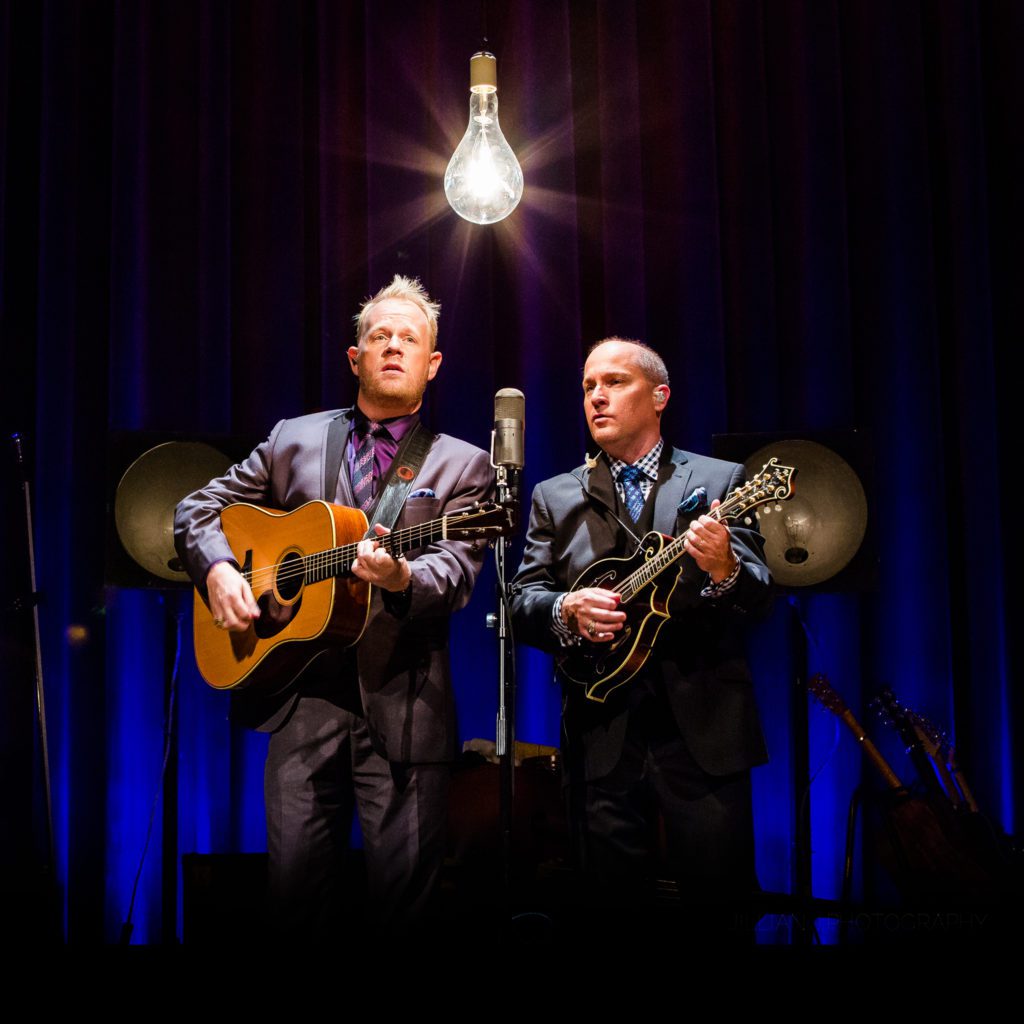
Bluegrass superstars Daily & Vincent celebrate 10th Anniversary with Grand Ole Opry performance

Duo Announces Upcoming Exhibit in International Bluegrass Music Hall of Fame The celebration will commence on December 30, when the “Entertainer of the Year” winners hit the stage at the Grand Ole Opry in Nashville, held at the historic Ryman Auditorium. They will perform a special star-studded 30-minute Opry segment. The night will also mark the pair’s 100th Opry performance. “We started our career on the stage of the Grand Ole Opry at the Ryman Auditorium nine years ago,” says Jamie Dailey. “I describe how touched and humbled I am to know we will be returning to kick off our 10th year on that same stage. The Grand Ole Opry is like coming home for us.” Dailey & Vincent will continue the celebration with another career first, as they open their own personalized exhibit at the world-renowned International Bluegrass Hall of Fame and Museum in Owensboro, Ky. Other legends featured at the prestigious museum include bluegrass legends Earl Scruggs, Lester Flatt, Ralph Stanley and more. Fans can stop by and experience “A Decade of Dailey & Vincent – An American Music Journey,” showcasing artifacts, memorabilia, and other priceless mementos from their band’s iconic career. The exhibit is set to launch January 13, 2017 at the original museum location, and will also be celebrated with an intimate concert performance broadcast LIVE on SiriusXM’s Bluegrass Junction, followed by a meet & greet and reception (fans can purchase tickets HERE). “A dream of ours was to start our career at the Grand Ole Opry in 2007. Ten years later, celebrating this milestone brings overwhelming feelings of joy and excitement” says Darrin Vincent. “Also, having another first for us with our exhibit at the Bluegrass Music Hall of Fame is wonderful. I never thought I’d live to see that. In thinking about these milestones, I feel too thankful for my family and a lifetime of love and support they have given to me. My father passed away 2 years ago, but it brings tears to my eyes knowing that he would be so proud.”

Bluegrass superstars Daily & Vincent celebrate 10th Anniversary with Grand Ole Opry performance Read More »

Scroll to Top